


VNNIOSH receives KOSHA delegation: Promoting cooperation in biological monitoring of occupational diseases
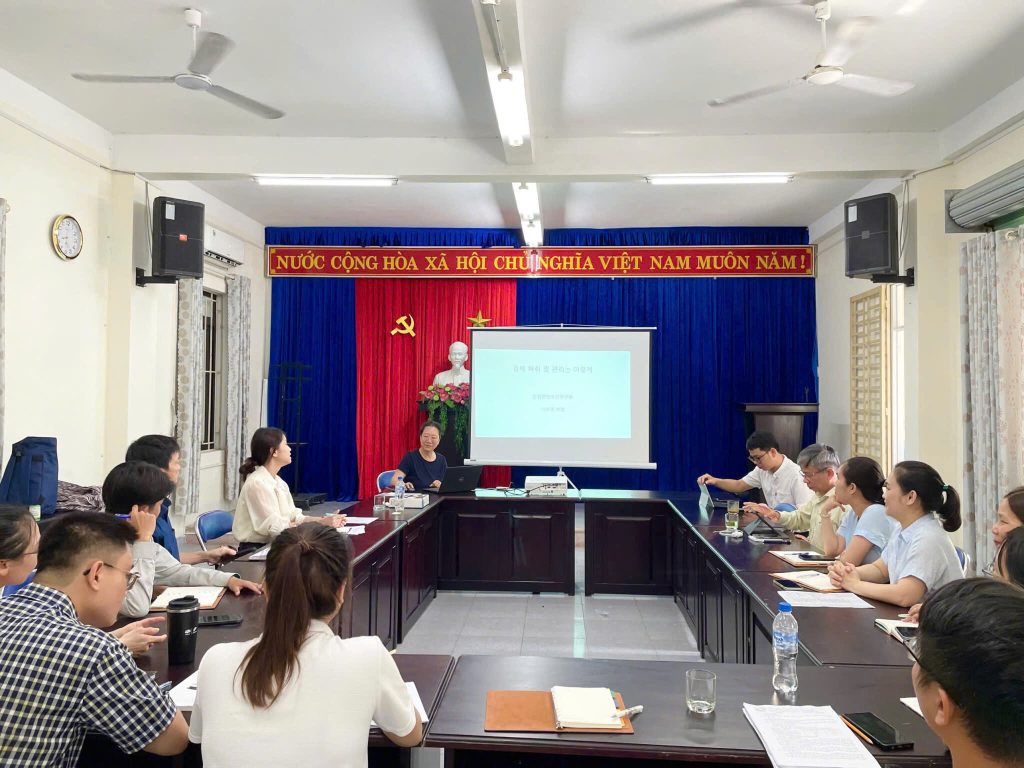
Dr. Lee Mi Young exchanging experiences on occupational disease biological monitoring
From May 26-30, 2025, Vietnam National Institute of Occupational Safety and Health (VNNIOSH) received and worked with Dr. Lee Mi Young from OSHRI, Korea Occupational Safety and Health Agency (KOSHA), this is an activity within the framework of the arrangement on technical collabouration between the two sides for the period 2022-2025.
In Hanoi, the KOSHA expert worked with the Occupational Health Center, VNNIOSH. Both sides discussed and practiced in depth the testing process of some acids (BAA, MAA, EAA) and the process of building QC samples to Korean standards with indicators such as 2,5-HD, acetone, MIBK, MEK… from urine samples, sharing experiences in biological monitoring according to the latest standards of countries such as Korea, the US and Germany. Dr Lee Mi Young also guided the practice of sampling techniques, sample preservation, standard sample construction and analysis operations on GC-MS equipment. The Occupational Health Center also proposed two potential research directions: (1) assessing the level of n-hexane exposure from urine test results in occupational health examination; (2) studying and proposing to adjust the lead exposure standard to match ACGIH standards.
On May 29-30, 2025, at the Branch of VNNIOSH in the Central Vietnam in Da Nang, KOSHA expert shared experiences in organizing external quality assessment (EQA) of occupational disease biological monitoring. The content focused on methods of sampling for toxicological testing in biological samples, sampling time, influencing factors during sampling, storage conditions and analysis time. The staff of the Branch were instructed to practice evaluating EQA results, processing data and learning about the limits of biological monitoring indicators currently applied in Korea. KOSHA expert also guided the practice of analyzing some metal indicators in blood and urine using AAS, the process of analyzing organic solvent indicators on GC-MS and HPLC equipment, along with notes on chemical preparation and maintaining equipment performance, contributing to improving laboratory operational capacity.
This working and exchanging experience has helped VNNIOSH staff gain a lot of practical experience, contributing to improving professional capacity in the field of occupational disease biological monitoring. The two sides also summarized and proposed directions for technical cooperation and experience exchange in the coming time, aiming at the common goal of improving working conditions and protecting workers’ health in the new context.


